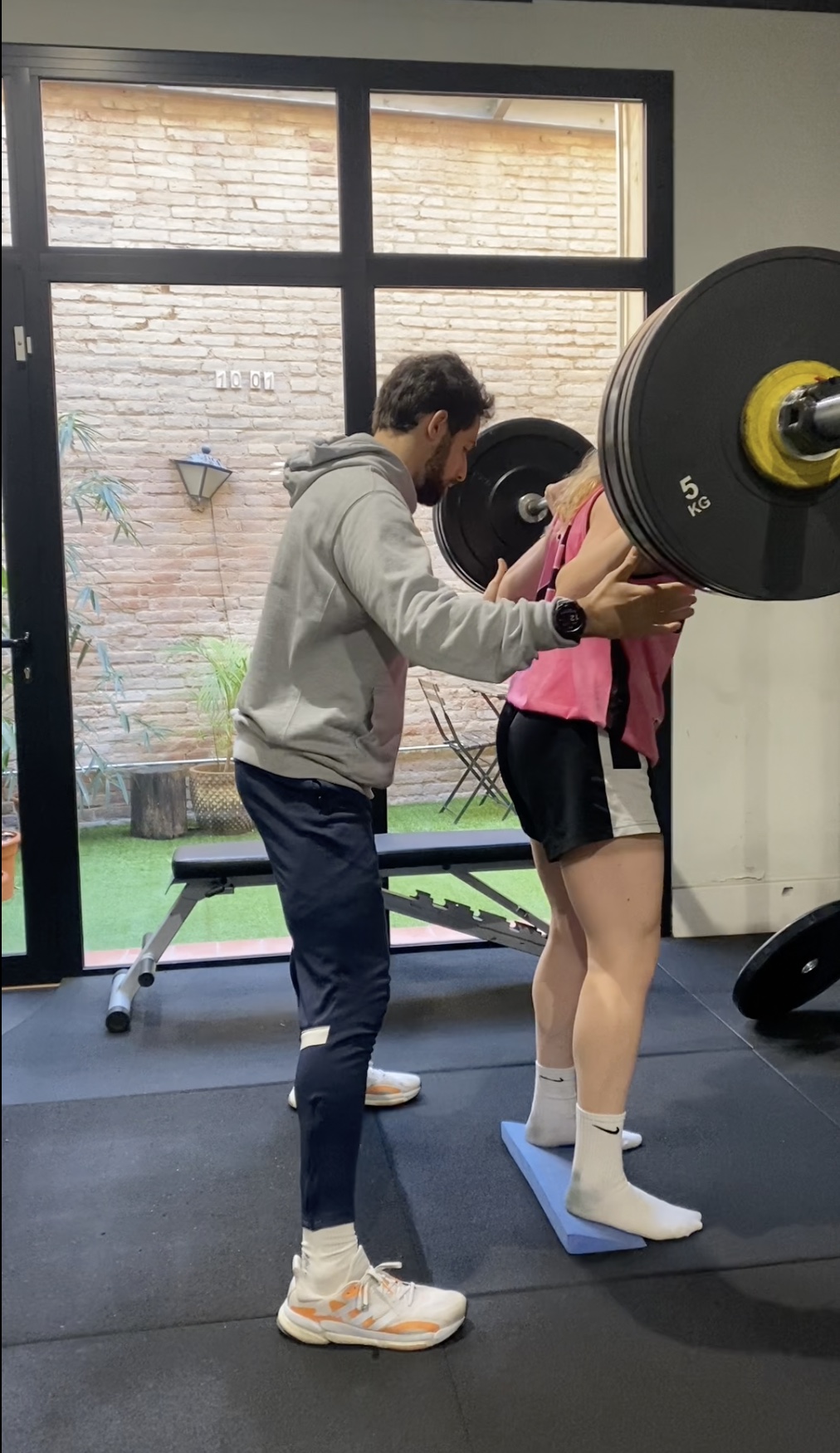
Why your back hurts
Lower back pain rarely has a single cause. A pelvis that does not move well, a core that does not stabilise or a back that is not used to load make the lower back take on more work than it should. That is why rest is not enough: the back has to learn to move and handle load.
Hamstrings that always feel tight are a similar story: often they are not short but overloaded by compensations. If the hip does not move well, the glutes lack strength or lumbopelvic control is missing, the hamstrings work harder to protect. That is why stretching again and again does not change the feeling.
We work with you, among other cases, if you have:
- Back pain when bending down or lifting.
- Lower back stiffness when you get up or after hours of sitting.
- Hamstrings that always feel tight however much you stretch.
- Discomfort that returns every time you go back to sport.
- Fear of lifting after an episode of pain.
How we work on it
Assessment
Hip mobility, glute strength, core control and lumbopelvic control: we look for the source, not just the symptom.
Mobility
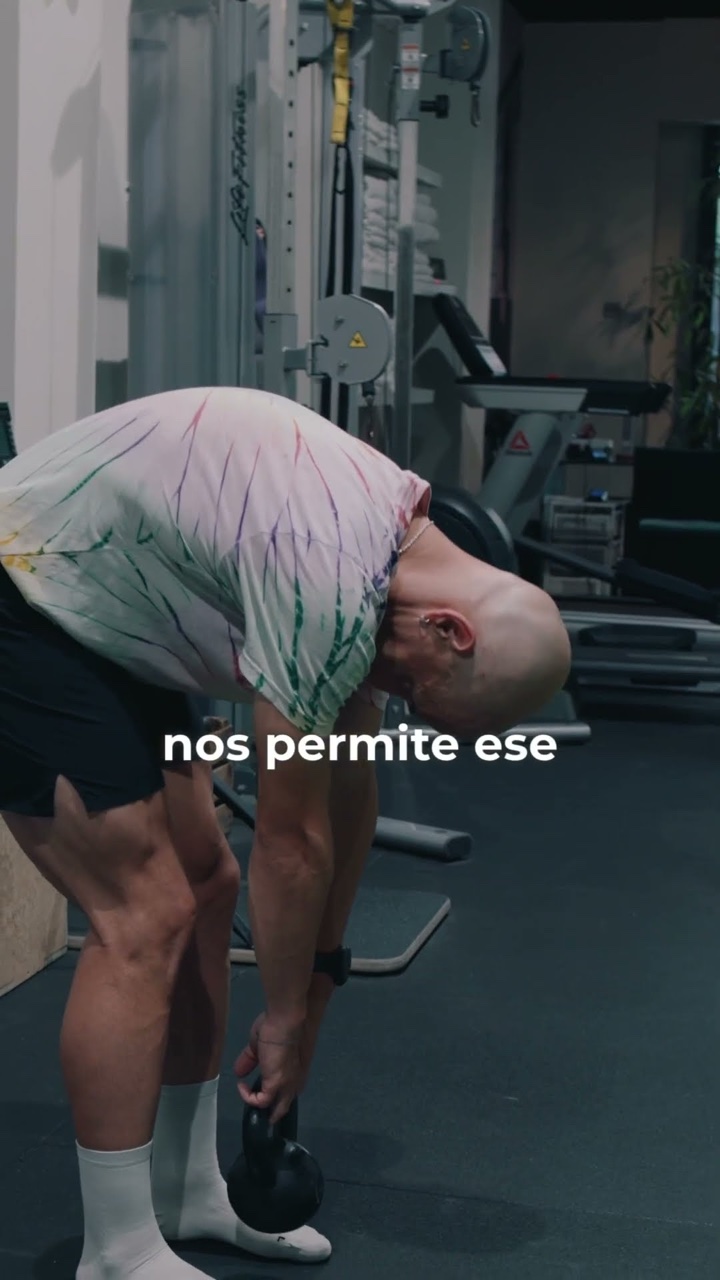
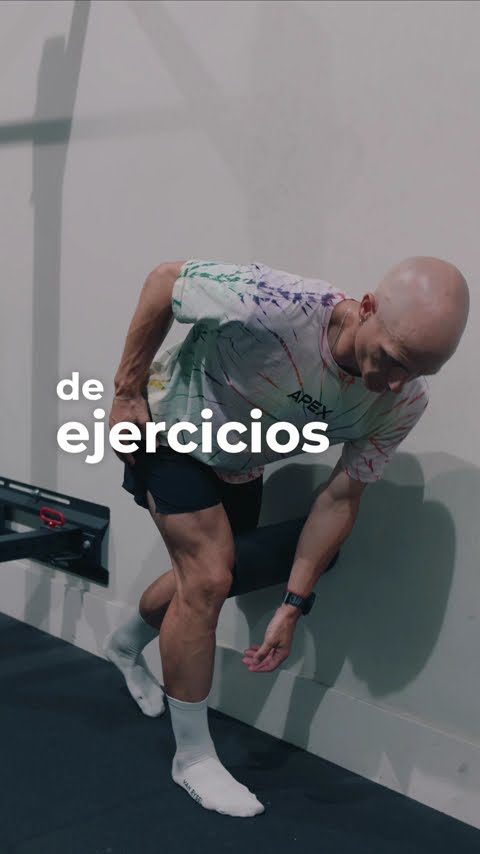
Exercises such as pelvic mobilisation with a foam roller or the Jefferson curl, slow and light, so the back tolerates bending.
Core and control
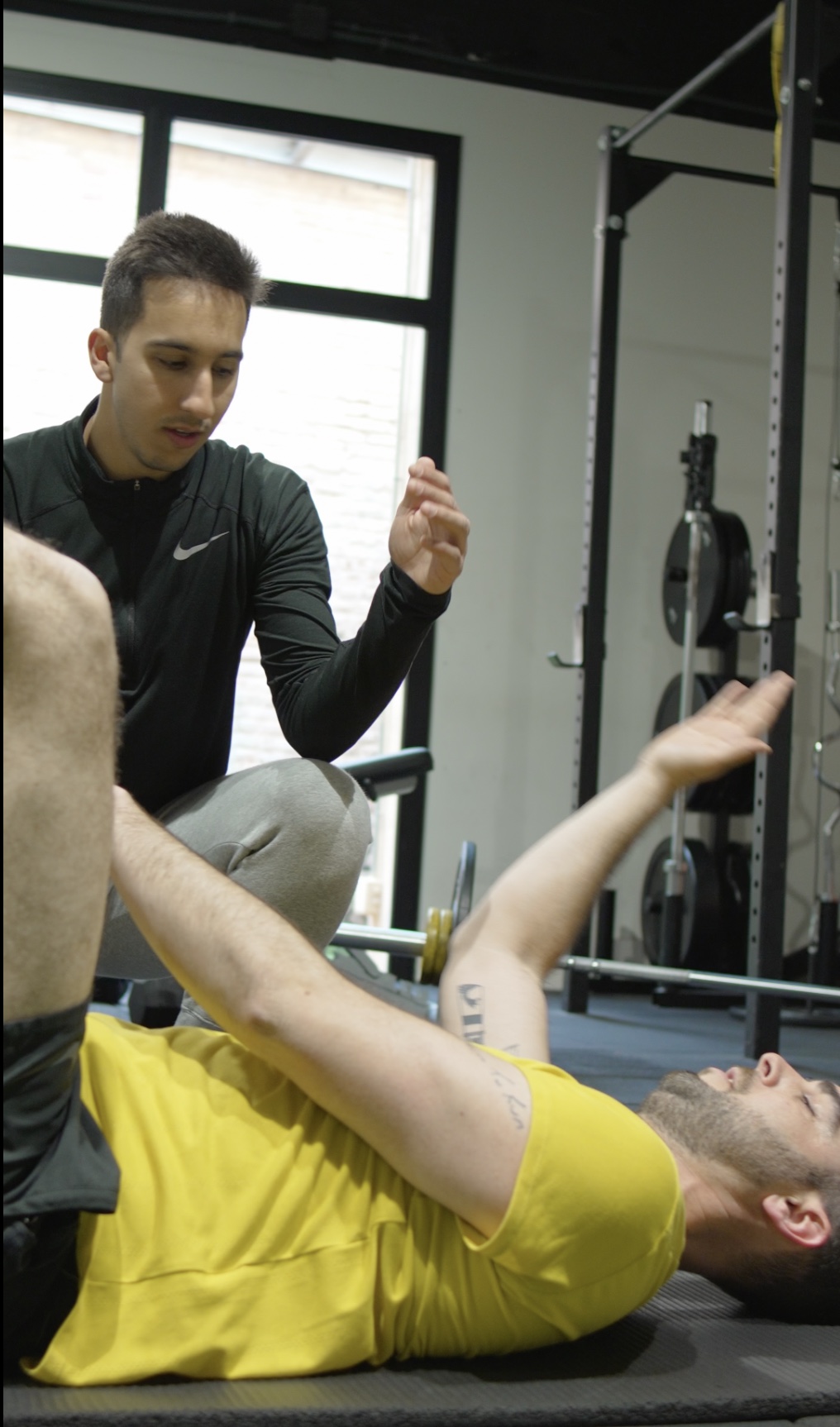
The dead bug and other stability exercises, to control the spine while the arms and legs move.
Strength
The deadlift, well executed and progressed, to build a strong back. If it hurts, we coordinate it with physiotherapy and dry needling.
We start with an assessment: physiotherapy if there is pain, and personal training so it does not come back. See rates
Marc Martínez
Specialises in endurance sports and in working with pain. He takes an individual approach, adapting each plan to the person's real needs: their context, their history and their goals.
He believes in continuous learning and constant communication, so the plan evolves with you and you progress safely, consistently and independently.