Dry needling

Less muscle tension, more mobility.

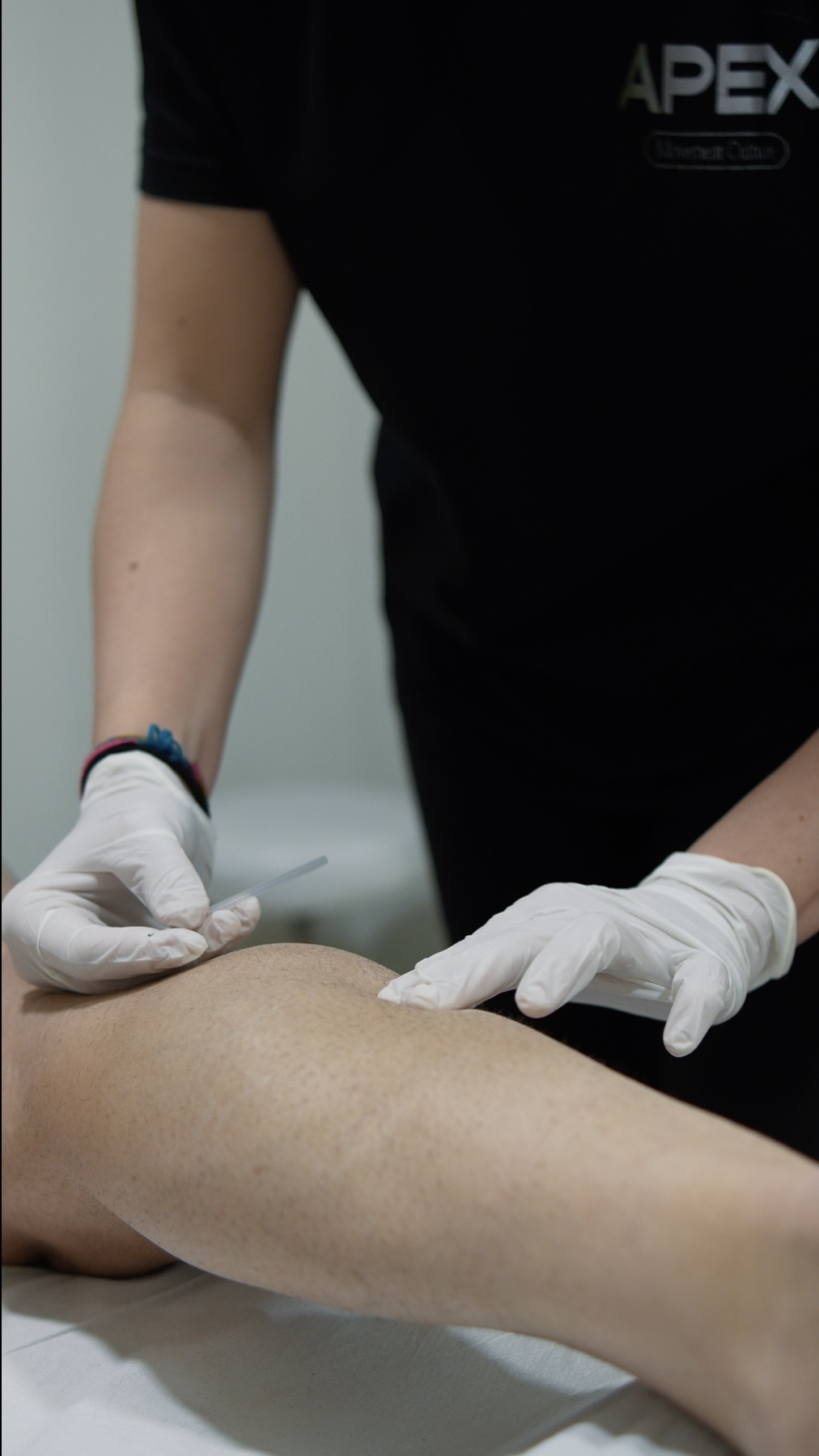
Neus González dry needling a calf
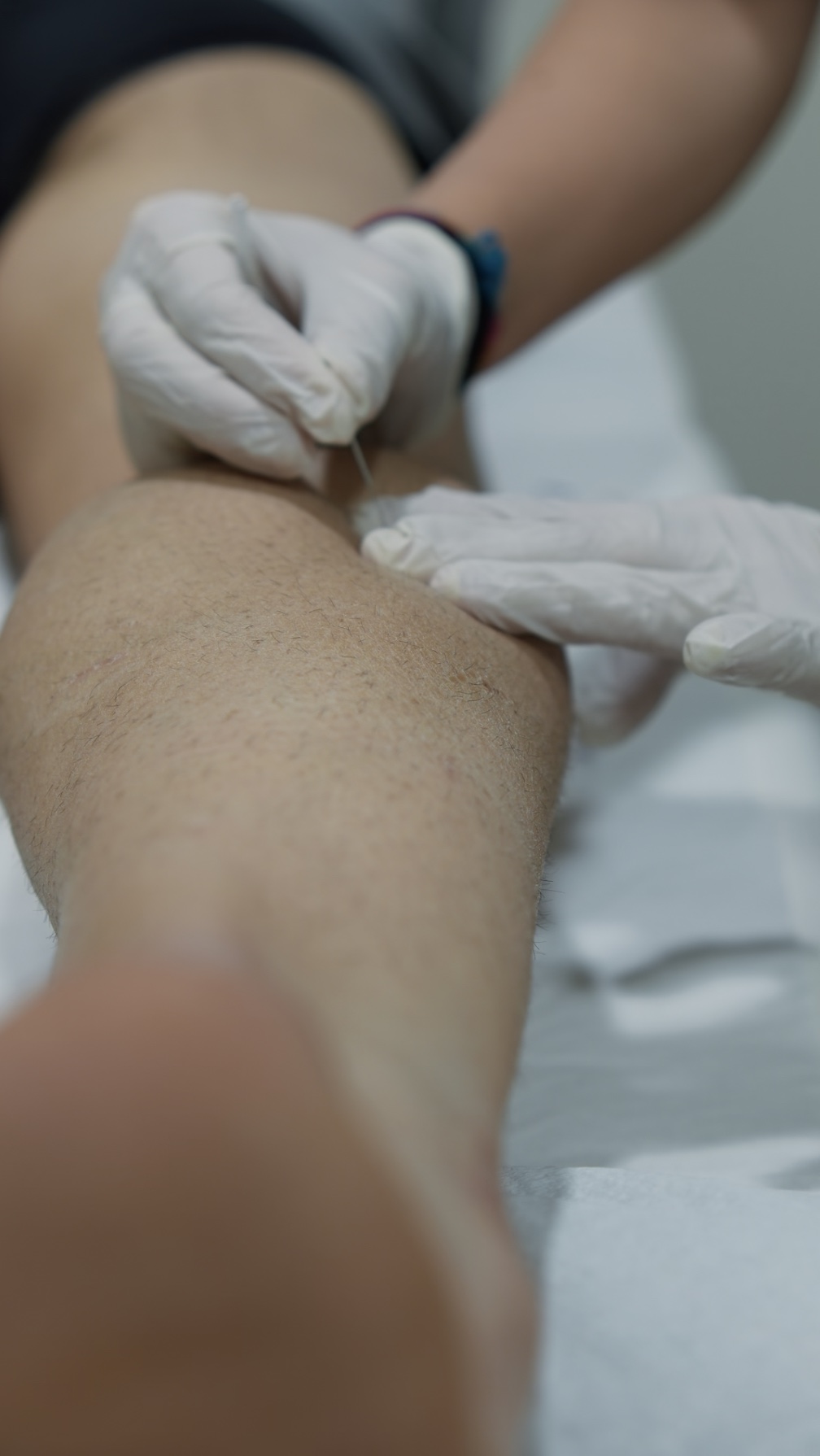
Close-up of a dry needling needle in the leg

Always after an assessment, with sterile single-use needles.

What is dry needling

It is a physiotherapy technique for muscle pain and tension. We locate trigger points, small spots in the muscle that cause pain or stiffness, sometimes elsewhere in the body too, and work on them directly with a very fine needle.

The muscle responds by relaxing: circulation improves and tension drops. The change in pain and mobility is usually felt early, and therapeutic exercise helps it last.

It can help, among other cases, if you have:

  • Knots or overload in the neck, upper back or back.
  • Muscle pain that keeps coming back.
  • Tension headaches linked to the neck muscles.
  • Sports overload in the calves, hamstrings, quads or shoulder.
  • Stiffness that holds you back when moving or training.

What a session looks like

01

Assessment

Your history, your symptoms and how you move, to decide whether dry needling is the right and safe technique for you.

02

Needling

We locate the trigger points and work with sterile single-use needles. You may feel a prick and a small twitch in the muscle.

03

Manual therapy and exercise

We combine it with manual therapy and therapeutic exercise, so the relief lasts.

04

Coordinated with your training

If you train at APEX, we adjust the next days' loads with your coach.

Dry needling is applied within a physiotherapy session. Initial assessment 70 € · Session 65 € · Packs from 54 €/session · 15 % less for clients with a programme. See rates
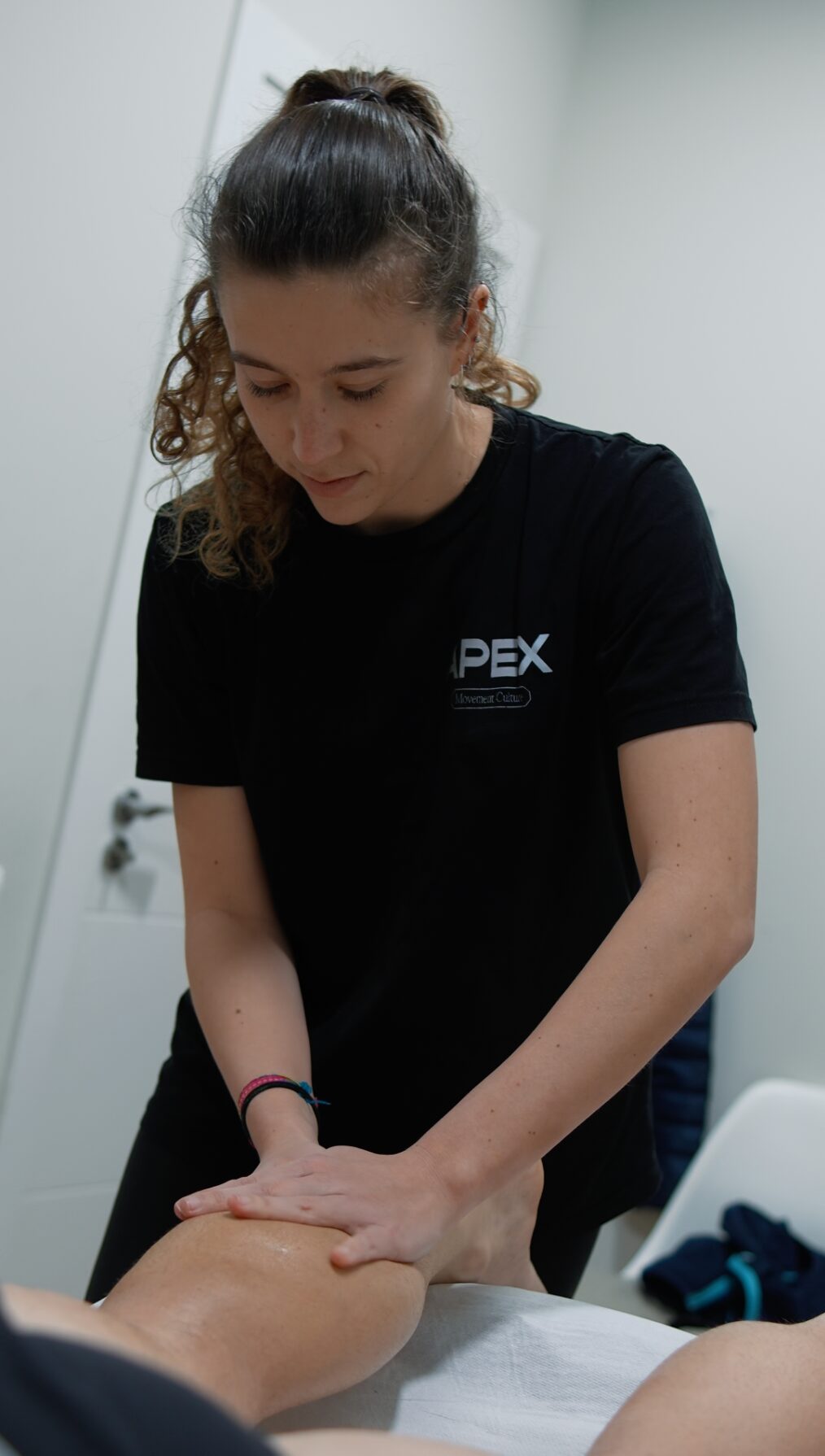
Neus González
Physiotherapist

Neus González

Health and wellbeing are complex, which is why her method starts from clinical reasoning. It's not just about relieving pain, but about understanding the body as a whole and looking at each case individually.

In many cases she makes therapeutic exercise an essential part of treatment. She also uses dry needling, which helps reduce pain and muscle symptoms, improves circulation and can help with recovery.
Watch it on video

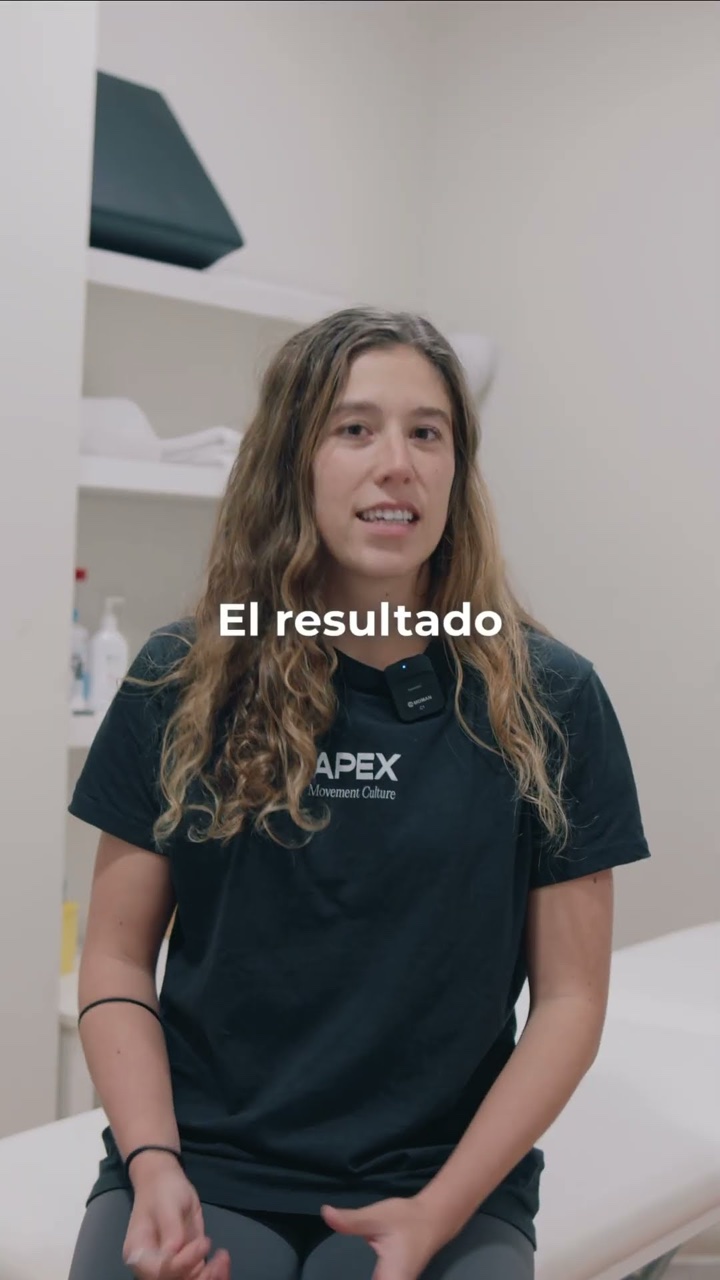
Watch the video: What dry needling is 0:53

What dry needling is

Neus explains how she works on trigger points, who it is for and why she always starts with an assessment.

In Spanish

Common questions

You will feel the prick and sometimes a small twitch in the muscle, like a brief cramp. Afterwards there may be a feeling similar to muscle soreness for a day or two.

No. Both use fine needles, but dry needling is based on anatomy and the muscle's trigger points, and it is applied by a physiotherapist as part of physiotherapy treatment.

Yes. We do not apply it, or we assess it carefully, if you have a strong fear of needles, take anticoagulants or have a clotting disorder, are pregnant, or have an infection or wound in the area. That is why we always start with an assessment.

It depends on your case. Many people notice a change from the first session; after the assessment we give you a realistic estimate that we review as you go.

Light activity, yes. On the same day it is best to avoid hard work with the treated muscle; we will tell you when to go back to your usual training.

Start with a conversation

We reply within 24 hours. If you prefer, message us directly on WhatsApp or give us a call.

Send us a message

Tell us what you're looking for and we'll suggest an initial assessment, with no commitment.

OAK FACTORY S.L. will use your details only to reply to you. You can access, correct or delete them by writing to info@apexmovementculture.com. More information in the privacy policy.